Nippon Steel confirms 100-day outage for Gary No. 14 reline as it swings to a loss
U.S. Steel plans to idle the No. 14 blast furnace at its Gary Works near Chicago for a reline for ~100 days from May to August.



U.S. Steel plans to idle the No. 14 blast furnace at its Gary Works near Chicago for a reline for ~100 days from May to August.

Flat-rolled steel prices inched upward again this week as mixed demand appeared to be offset by limited supplies.

The Tampa Steel Conference will kick off just a few days after the Super Bowl, and I think it’s fair to say that we could be reacting to market developments in real time – again.
At SMU, we ask the big questions: To be or not to be? Hot band at a grand? On the one hand, whether hot-rolled coil price can or can’t go above $1,000 per short (st) is a silly argument. It’s just a number. On the other hand, round numbers are something that we tend to fixate on. They can be psychologically important to a market – even if they shouldn’t be.
Sheet prices mostly continued their uneven but steady march higher this week, according to SMU’s latest check of the market.
AZZ Inc. posted on its website that it had temporarily closed more than half a dozen locations in response to the extremely cold weather gripping much of the US.
“The premise for the board’s rejection was insufficient value. Yet they provided shareholders with no reasonable, executable alternative strategy that would provide the same certainty of shareholder return,” SDI Co-founder, Chairman, and CEO Mark Millett said.
Steel Dynamics Inc. reported higher Q4 profits despite lower contract prices for flat-rolled steel and more outages than usual in the quarter.
President Donald Trump in a post on Truth Social threatened to impose 100% tariffs on all exports from Canada into the US. It would be boastful (but not entirely inaccurate) to say you read it in SMU and heard it on Aluminum Market Update (AMU) first.
Does the level of geopolitical uncertainty get to the point where it impacts not only the stock market but also the broader steel market? Could we see a repeat of Liberation Day, or will the news cycle move on to something else by the end of the week? I don't pretend to know what might happen in Davos. Suffice it to say, it’s going to be a newsy week.

CSN LLC General Director Jerry Richardson will join Steel Market Update (SMU) for a Community Chat on Wednesday, Jan. 21, at 11 am ET.
We’ve got some exciting announcements to make about the Tampa Steel Conference, which is now less than a month away! First, I’m very happy to say that Worthington Steel President and CEO Geoff Gilmore will be joining Kloeckner Metals CEO John Ganem on the stage for a fireside chat with my colleague David Schollaert.
CSN LLC General Director Jerry Richardson will join Steel Market Update (SMU) for a Community Chat on Weds., Jan. 21, at 11 am ET.
The US steel market has gotten off to a fast start. Prices are up as lead times extend. And the news is coming in hot too.
Steel sheet and plate prices rose across the board to start the year on limited spot availability at some mills, expectations of higher scrap prices, and hopes of stronger demand in 2026.
It's that time of year, when we look back at where we've been and forward to what the new year might bring. So, before we look forward to 2026, let’s take a quick look back at 2025.

Independent service center Promet Steel Inc. has acquired Heidtman Steel Products' facility in East Chicago, Ind. Terms of the deal, which closed on Dec. 15, were not disclosed.
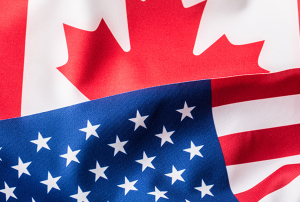
Canadian Prime Minister Mark Carney said the US probably won't reduce tariffs on steel, aluminum, and other goods from Canada anytime soon.
Sheet prices mostly ticked higher again this week. And the reasons shouldn’t come as a big surprise to anyone who has been reading SMU lately.

SMU and AMU are pleased to announce that Wells Fargo Managing Director Timna Tanners will be joining us for a Community Chat webinar on Wednesday, Dec. 17, at 11 am ET.
There was a palpable sense of optimism among folks at the HARDI conference about demand from data centers. In other words, around the physical infrastructure – which also includes energy transmission - needed to feed the AI boom. The big question: Could demand from data and AI be far stronger than the market yet realizes?
SMU and AMU are pleased to announced that Wells Fargo Managing Director Timna Tanners will be joining us for a Community Chat webinar next Wednesday, Dec. 17, at 11 am ET.
Canadian service center Varsteel Ltd. has acquired Victoria Steel (also known as Acier Victoria) of Victoriaville, Quebec.
U.S. Steel has begun the process of restarting the 'B' blast furnace at its Granite City Works near St. Louis. “After several months of carefully analyzing customer demand, we made the decision to restart a blast furnace,” U.S. Steel President and CEO David B. Burritt said in a statement on Thursday afternoon.
It's important to keep in mind - maybe especially for those of us in the US - that the rest of the world can act too. And I think we're already seeing signs of that action, or at least that's been my takeaway from some of SMU's recent reporting and from Community Chat webinars for both SMU and AMU.
A colorful serial entrepreneur, NEMO Industries Co-founder and CEO Daniel Liss is new to steel but not short on potentially transformative ideas.
The price hike parade that got underway in earnest in November looks set to continue in December. And it's been joined by, well, just about everybody.
Please note that SMU has removed the article titled: Alleged transshipment of Chinese steel plate raises red flags in Houston
You might be looking forward to some Black Friday deals. But I wouldn't expect many, at least when it comes to flat-rolled steel.
A colorful serial entrepreneur, NEMO Industries Co-founder and CEO Daniel Liss has done everything from working for Hollywood star Sofia Vergara to building a venture-backed Instagram competitor Dispo. He is new to steel but not short on potentially transformative ideas.