CRU: Trump’s sweeping tariffs could derail the US met coal industry
Latest tariffs could lead to US metallurgical coal exporters (many already high-cost swing producers) being priced out of the market.


Latest tariffs could lead to US metallurgical coal exporters (many already high-cost swing producers) being priced out of the market.
The Commerce Department has made a preliminary determination that ‘critical circumstances’ exist for certain imports of corrosion-resistant (CORE) flat-rolled steel from the United Arab Emirates (UAE). Commerce decided that critical circumstances did not apply to CORE from South Africa. The department also found that critical circumstances did not apply to CORE from UAE producers Al-Ghurair Iron & Steel LLC and United Iron & Steel Company LLC.

Announcing tariffs is easy. Implementing them at the border? That’s a whole different ball game.
President Trump’s promised “Liberation Day” has arrived, with a 10% minimum tariff on imports. But there are some very important exceptions: The United States’ USMCA partners, Canada and Mexico, are excluded from the reciprocal tariffs for now. In addition, steel, aluminum, as well as autos and auto parts are excluded from the reciprocal tariffs. That’s […]

The constant flow of information we all receive can be a little overwhelming, but SMU is here to help with a snapshot of the week.
President Trump said on Monday there may be exceptions for some countries on reciprocal tariffs.
These developments come at a time when the global trading system has been shaken up by US President Donald Trump’s greater use of tariffs, including employing Section 232 legislation to impose a 25% levy on steel from all countries to protect national security.

Which is more important: producers or consumers? New (and arbitrary) steel and aluminum tariffs took effect last Wednesday. Based on the Section 232 trade restrictions initially imposed in 2018 – and kept by the Biden administration – they abrogate agreements between the US and Canada, Mexico, the UK, the EU, Argentina, Brazil, and Australia. They […]
Canada and the European Union are retaliating against what they deem to be unjustified tariffs on steel and aluminum by the United States.
US steel exports recovered to a five-month high in January after having fallen to a two-year low in December. This growth follows four consecutive months of declining exports.
Steel imports ended 2024 on a low note, with November trade falling to a one-year low and December seeing a modest 3% recovery. Then as the new year began, import volumes spiked.
Facing an uncertain tariff trade war, Algoma Steel took action this week, halting steel shipments to the US, laying off employees, and prepping for an unknown future, according to local media reports.
Manufacturing activity exhibited slight to modest increases across a majority of districts. However, manufacturers expressed concerns over the potential impact of looming trade policy changes between late January and February.

On 4 March, new 25% blanket tariffs across all products exported to the USA from Canada and Mexico are now in effect. The only exception is Canadian energy products, which will be assessed a 10% tariff.
While Congress has given the president enormous power over trade policy, the president wants to test the limits of that authority. If there are no guardrails, our economic and political liberty may be on the block. Stay tuned.
Increased protectionism is expected to continue to drive up steel prices in the US and Europe.
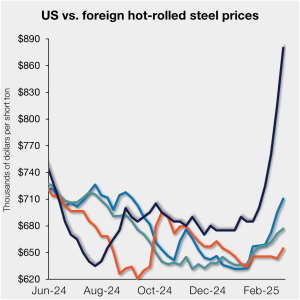
Hot-rolled (HR) coil prices continued to rally in the US this week, quickly outpacing price gains seen abroad. The result: US hot band prices have grown widely more expensive than imports on a landed basis. The premium US HR tags carry over HR prices abroad now stands at a 14-month high. SMU’s average domestic HR […]

Do we want the benefits of the Section 232 tariffs to flow to the bottom lines of foreign steel and aluminum producers or to the US government and, ultimately, domestic manufacturers and their workers? In our view, the answer is simple. Section 232 exceptions do nothing more than lead to underserved profits for foreign manufacturers who are harming the US industrial base. That revenue could be used to pursue the Trump administration’s other policy priorities - such as deficit reduction or expanded tax cuts.
President Donald Trump said last week that he could place tariffs on auto imports, according to an article in Politico.
With a chronic trade deficit, the administration will continue to cite more tariffs as necessary. This is in error, as noted above. Yet the base of President Trump’s support does not see it that way. More tariffs are possible. But the only way to reduce the US trade deficit substantially is to close the gap between savings and investment in the United States.
December 2024 marks the fourth month in a row that steel exports have declined, now at the lowest monthly rate recorded since December 2022.
Following the one-year low recorded in November, steel imports rose by 3% in December to 2.14 million short tons (st) according to final US Commerce Department data. January could be the highest month for steel imports witnessed in nearly three years.
The day-to-day bustle of these announcements should not obscure what they signal for other potential tariff measures in the near term and a revamped trade and economic policy in the long term.
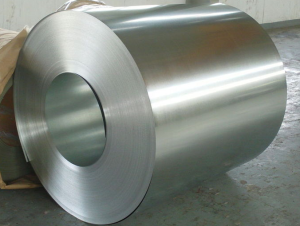
The Commerce Department on Tuesday issued preliminary subsidy rates in the corrosion-resistant steel (CORE) trade case. The agency set minimal countervailing duty (CVD) rates for Brazil and Mexico, mostly high rates for Vietnam, and low rates for Canada, except for one privately held distributor. Commerce assigned that company, Nova Steel, and a handful of Vietnamese […]
Mexican steel trade association Canacero said US steel exports represent “a threat to the Mexican steel industry.” Canacero also backed retaliatory measures if President Trump enacts 25% tariffs on Mexico by Feb. 1.
Earlier this week, SMU polled steel buyers on an array of topics, ranging from market prices, demand, and inventories to imports and evolving market events.
The Trump administration has backed off tariffs on Colombia after the White House said the leader of the Latin American nation agreed to President Trump’s demands. “The Government of Colombia has agreed to President Trump’s terms, including the unrestricted acceptance of illegal aliens from Colombia returned from the United States… without limitation or delay,” according […]
The American Iron and Steel Institute (AISI) has reached out to the Trump administration, as well as some members of Congress, to present a blueprint of issues that are top of mind for steel producers. “2025 presents an opportunity for the new administration and Congress to take a holistic look at the key issues impacting […]
President Donald Trump has promised an “overhaul” of the US trade system, and in short order the unveiling of an “America First Trade Policy.” “I will immediately begin the overhaul of our trade system to protect American workers and families,” Trump declared in his inaugural address on Monday, Jan. 20. “Instead of taxing our […]
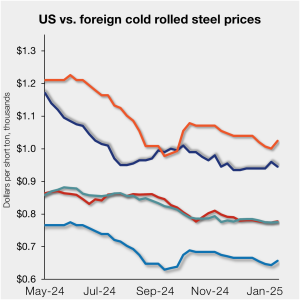
The price spread between US-produced cold-rolled (CR) coil and offshore products tightened in the week ended Jan. 17. Domestic CR coil tags were lower week on week (w/w), while offshore products ticked higher. The result? The US premium over imports shrank. In our market check on Tuesday, Jan. 14, US CR coil prices averaged $895 […]