
Mexico eyes steel tariffs on US as trade fight brews
Mexico has said it will place retaliatory steel tariffs on the United States if the US acts to reimpose Section 232 on its neighbor, according to an article in Reuters.


Mexico has said it will place retaliatory steel tariffs on the United States if the US acts to reimpose Section 232 on its neighbor, according to an article in Reuters.
What are some “Black Swans” to watch out for? With the war in Ukraine entering its third year, your mind might understandably move to conflicts overseas. Here is one closer to home to consider: US trade relations with Mexico taking a turn for the worse. I mention that because the Office of the United States Trade Representative (USTR) dropped a (virtual) bombshell earlier this month.
Falling US sheet prices have reduced the attractiveness of hot-rolled (HR) coil imports as domestic mills price competitively to secure limited business. However, tightness in the CR coil market has extended delivery to June or July in some cases, and buyers may consider to import given competitive prices and arrival times.
The United Auto Workers (UAW) executive board has voted to start a new “solidarity project” to support auto workers in Mexico.
Domestic prices have been sliding since the beginning of the year, and I don’t see any obvious reasons why the slide might stop this week. But let’s put the timing of a bottom aside for a minute. The question among some of you seems to be whether we’ll see another price spike, or at least a “dead-cat bounce,” before the typical summer doldrums kick in.

This week, the World Trade Organization (WTO) ministerial conference convenes in Abu Dhabi, UAE. There are many issues on the WTO’s plate. The question is whether any resolution of these matters is likely or even possible. One of the most important issues is the future of the dispute settlement system, which has been rendered impotent […]
US Trade Representative Katherine Tai has voiced the United States’ unease at a marked increase in steel and aluminum imports from Mexico, and what she termed a lack of transparency about Mexican imports of the metals from third countries.
Alan Kestenbaum, the CEO of Stelco, said the company is actively evaluating ways to grow the company, including both organic and inorganic opportunities.

Over my years of observing the steel market, there's been a recurring belief that current market disruptions in either the physical spot market or steel futures are temporary anomalies, destined to fade, and that normalcy will soon return. However, the events of the first few weeks of 2024 served as a stark reminder that this expectation seldom materializes, and that the US steel market is still the most volatile steel market in the world.
Canada will soon require steel imports to report “country of melt and pour” information.
While seaborne trade has been challenging due to weak global steel production, demand for ferrous scrap in the US remains strong, according to Sims Ltd.
Mercury Resources CEO Anton Posner will be the featured speaker on SMU’s next Community Chat webinar on Wednesday, Feb. 21, at 11 am ET. The live webinar is free for all. A recording of the webinar and the slide deck are free for SMU members.
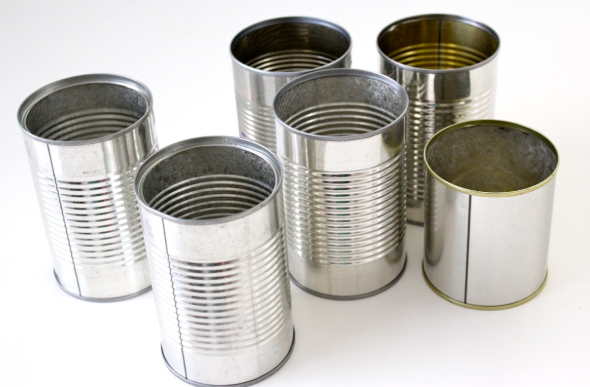
The International Trade Commission (ITC) voted earlier this month against imposing antidumping and countervailing duties on imports of tin mill products from four countries. When Cliffs filed trade cases on tin mill products in early 2023, the company claimed that the failure to get massive duties on imports would result in the closure of its mill in Weirton, W.Va. We don’t know the reasoning behind this decision, only that all four sitting Commissioners voted not to impose duties. We do know that Cliffs plans to close Weirton.
The CRUmpi declined by 1.7% month over month (m/m) to 325.2 in February, compared to a 4.3% m/m increase in February 2023.
The LME 3-month price was broadly stable again on the morning of Feb. 16, and was last seen trading at $2,230 per metric ton (mt). On Feb. 16, LME stocks were reported at 534,925 mt, an increase of nearly 10,000 mt from last Friday. The change comes after 15,125 mt of metal was delivered into […]
The scrap export market has demonstrated resiliency so far this year from the US East Coast. This strength has mainly come from the Turkish market. Despite weakening orders for rebar in their domestic market, imported scrap prices have held up until the last several days. The US West Coast is not as active, but there are orders in South Asia and in South America that are keeping things afloat.
Cleveland-Cliffs Inc. announced on Thursday, Feb. 15, that it will indefinitely idle tinplate production at its mill in Weirton, W.Va.
The US apparent steel supply moved up to 7.79 million short tons (st) in December, a rise of 2% from 7.67 million st in November, according to data from the Department of Commerce and the American Iron and Steel Institute (AISI). Apparent steel supply is determined by combining domestic steel mill shipments and finished US […]
What’s something going on in the market that no one is talking about? That’s a question on our survey, and was also posed to many who graced the stage at our Tampa Steel Conference. Perhaps another way to phrase that is “not talking about publicly” or connecting the dots of steel market chatter to find a uniting central issue. I thought one respondent to our survey really summed up the current moment: “Right now it is all politics.”

Last week, steel consumers prevailed in a rare victory over US petitioners in trade cases on tin mill steel products. The US International Trade Commission (ITC) voted 4—0 that Cleveland-Cliffs, the sole remaining domestic producer of tin mill products (used to make containers such as “tin cans”) was neither injured nor threatened with injury by imports of competing products from Canada, China, and Germany. Imports from South Korea were found to be “negligible,” and the investigation on Korean imports was terminated.
South Korean integrated steelmaker Posco has started building a 2.5-million-metric-ton-per-year (Mt/y) electric-arc furnace (EAF) at its Gwangyang works, a key stage in the company’s transition to becoming a green steel producer.
The US Midwest premium continued to trade between 18.8–19.4 cents per pound (¢/lb) this week. There remains a host of macroeconomic and geopolitical risks in the current environment, but none have affected the short-term outlook for the premium. Current trading for April reached 20 ¢/lb which is on par with CRU’s current forecast for Q2’24. Dates closer to the end of the year have fallen to 21.2 ¢/lb.
The US Environmental Protection has announced more stringent air quality standards that could impact domestic steel producers.
At the final hour, the trade case investigating unfairly traded imports of tin mill products has been terminated.
Former President Donald Trump discussed, if re-elected, placing a 60%-or-more tariff on all Chinese imports in an interview with Fox News on Sunday.
I participated in the 35th annual Tampa Steel Conference last week, a conclave of steel producers, consumers, traders, logisticians, and (a few) trade lawyers. I participated in a panel discussion concerning challenges in managing supply chains in these troubled times. Things appear to be heading in the wrong direction in this field. Supply chains were shown to be vulnerable to pandemics in 2020 and 2021, and, in 2022 and 2023, to regional conflicts and weather slowing or stopping the free movement of goods through trade bottlenecks (the Suez Canal, the Panama Canal, the Bosporus, etc.)

Just like doing business in any part of the steel supply chain, there are risks and unknowns in trading steel. But trading companies play an important part, helping businesses navigate the risks and unknowns as they pop up.
I thought Nippon Steel’s $14.1-billion deal for U.S. Steel might become a political football in this year’s presidential election. Now there is little doubt that it will after Trump told reporters in Washington, D.C., earlier this week that he would “absolutely” block the transaction – and that he would do so “instantaneously.”
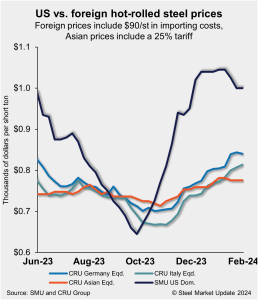
US hot-rolled coil (HRC) prices law little movement this week, a similar trend seen in offshore markets. Thus, the price premium domestic hot band carries over imported products was largely unchanged vs. the prior week.
I’m writing these final thoughts from the JW Marriott in Tampa. And I’m looking forward to seeing some of you reading this in just a few hours at the opening networking reception of the Tampa Steel Conference. Nearly 550 people will be there – a new record for the event. If you’re looking for things […]