
Steelmaking raw material prices increase through March
Prices for iron ore, aluminum, pig iron, and shredded scrap have all risen in the last 30 days. Busheling scrap held steady, while zinc and coking coal declined.


Prices for iron ore, aluminum, pig iron, and shredded scrap have all risen in the last 30 days. Busheling scrap held steady, while zinc and coking coal declined.

The US Export Import Bank (Ex-Im) has said it will support a Mesabi Metallics iron ore project in Minnesota to up to $10 billion, according to a report in the Economic Times of India.

This CRU insight demonstrates how the conflict in Middle East supports metallurgical coal prices and iron ore will be impacted by a potential decline in demand from China and rising costs, while the pellet market will be severely disrupted.
The main impact on the ferrous value chain from the Middle East conflict will be the higher energy costs in a prolonged scenario.

Iron ore shipments on the Great Lakes reached 2 million short tons in January.
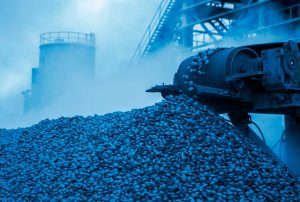
MagIron LLC is moving to advance its DR-grade pellet and pig iron strategy. The Minnesota-based company closed on its acquisition of AHMSA's Reynolds Pellet Plant in Indiana on Dec. 31.
US-flagged iron ore shipments on the Great Lakes fell last year vs. 2024.
All but one of the steelmaking raw materials we track increased in price over the last month
This CRU Insight provides details on the decline of Venezuela’s steel, DRI, and iron ore industries, which highlights the potential scope of recovery with the right policy agenda and support.

A federal judge in Pittsburgh has ordered U.S. Steel and Algoma Steel to resolve their iron ore pellet contract dispute through arbitration. The decision comes after USS sued the Canadian steelmaker for refusing a shipment of iron ore pellets from U.S. Steel's Minnesota operations in September.

NEMO Industries CEO Daniel Liss has already made waves with his bold plan to bring pig iron production back to US soil. In an SMU Community Chat on Wednesday, he shifted the conversation from inspiration to execution, laying out timelines, financing strategies, and customer demand that could reshape the steel supply chain by the end of the decade.

Most steelmaking raw material prices remained stable over the past month. Prices are mixed in comparison to this time last year.
US-flagged shipments of iron ore on the Great Lakes are on the decline. Ore shipments in October were the lowest they’ve been for that month in five years.
India's JSW Steel reported a 307% year-on-year (y/y) jump in net profit to INR16.5 bn ($188 million, €161 million) in fiscal Q2.
Iron ore shipments from US Great Lakes ports fell sharply in September, per the latest from the Lake Carriers’ Association (LCA) of Westlake, Ohio.

U.S. Steel is suing Algoma over the Canadian flat-rolled producer's rejection of iron pellet shipments, arguing it has breached its contract.
Most steelmaking raw material prices held steady or ticked higher over the past month
For the next month, CRU forecasts that global demand for steelmaking raw materials will increase month on month (m/m).
Most steelmaking raw material prices we track saw little change across the month of August. Iron ore, pig iron, shredded scrap, busheling scrap, zinc, and aluminum prices all held relatively steady,
Prices for four of the seven steelmaking raw materials we track were unchanged from late June through the end of July, while two increased and one declined. Collectively, these material prices rose 1% month over month (m/m), but are down 3% compared to three months ago.

The Trump administration has exempted Brazilian pig iron and iron ore from an aggressive "reciprocal" tariff ahead of the Aug. 1 deadline.
According to our latest analysis, prices for four of the seven steelmaking raw materials we track declined from May to June. Collectively, these materials declined 3% month over month (m/m) and are down 9% compared to three months ago.
The Lake Carriers' Association reported a considerable decline in monthly iron ore shipments from US ports on the Great Lakes.
According to our latest analysis, prices for four of the seven steelmaking raw materials we track increased from April to May. However, select materials saw a collective 1% decline month over month and are down 4% compared to three months ago.
Iron ore prices were largely steady in March, hovering around $100–102 per dry metric ton (dmt) in a quiet market.

There are several other tariffs implications concerning the ferrous raw materials sector. In addition to tariffs on DRI/HBI imports, there will be also be a tariff on raw materials imported to domestically based metallics producers.
Recall that shipments also saw a sharp decline in January.
The temporary measures “are necessary to re-balance working capital needs and consume excess pellet inventory produced in 2024,” Cliffs told SMU.
Prices for five of the seven steelmaking raw materials tracked by SMU increased from February to March, according to our latest analysis.
Prices for six of the seven steelmaking raw materials SMU tracks are increased from January to February, according to our latest analysis.