Guardian Bikes pushes to reshore and scale US bicycle manufacturing
As it accelerates an ambitious push to reshore American bicycle manufacturing, Guardian Bikes is seeking special tariff consideration for the bicycle industry.


As it accelerates an ambitious push to reshore American bicycle manufacturing, Guardian Bikes is seeking special tariff consideration for the bicycle industry.

More liberal access to the Northwest Passage could play into trade negotiations between Canada and the United States.

Usually, I write about steel in this column because, well, we’re Steel Market Update. But before I get to steel, I want to give a shoutout to my colleagues at Aluminum Market Update (AMU) – SMU’s new sister publication.
AZZ Inc. delivered steady results in its fiscal second quarter. While infrastructure-heavy work buoyed its Metal Coatings segment, its Precoat Metals business navigated softer building markets and tariff-driven uncertainty.
Canadian Prime Minister Mark Carney and US President Donald Trump told reporters at the White House on Tuesday that they’ll be formulating a trade deal that works for both nations.
Most steelmaking raw material prices held steady or ticked higher over the past month

Signs of weakness are already appearing in the tariff wall. The economy has slowed to the point that the Federal Reserve cut interest rates by 0.25%, or 25 basis points, last week. The cut came even as the rate of inflation continues to hover well above the Fed’s 2% target rate.
Steel Dynamics Inc. is bullish heading into the close of the third quarter, with all three of its operating segments tracking higher.
Rising Midwest and European premiums are giving Canadian aluminum producers a rare boost, restoring pricing power just ahead of key 2026 negotiations.
U.S. Steel has revised its Galvalume coating extras higher effective Nov. 2, 2025. The steelmaker released new extras to customers on Friday, Sept. 12.
Let me begin by extending sincere congratulations to the EGA/Spectro Alloys team on achieving their first metal casting at the Rosemount (MN) secondary billet casthouse.
Most steelmaking raw material prices we track saw little change across the month of August. Iron ore, pig iron, shredded scrap, busheling scrap, zinc, and aluminum prices all held relatively steady,
On Thursday, the U.S. and EU agreed to more concrete terms to their handshake deal of last month.
Galvanized steel prices dipped to ~$48/hundredweight in August from the $50-59/hundredweight range during the month of July.
The Commerce Department has added over 400 HTS codes to the list of steel and aluminum derivative products covered under the Section 232 tariffs.
Hardly a day goes by without someone writing about the expected rise in US electricity demand. This demand is largely driven by data center and AI’s appetite for power.

Sheet and plate prices were either flat or modestly lower this week on softer demand and increasing domestic capacity.
Prices for four of the seven steelmaking raw materials we track were unchanged from late June through the end of July, while two increased and one declined. Collectively, these material prices rose 1% month over month (m/m), but are down 3% compared to three months ago.
While US construction markets are far from uniform, recent indicators from June and July paint an unusually fragmented picture.
Tariff threats on Brazil aren't just hitting steel products. Aluminum is also feeling the heat.
The commercial vehicle sector is showing signs of fatigue, but you wouldn’t know it at first glance of the latest government figures.
CDC Atlantic already houses 13 die-casting machines (ranging from 900 to 1,600 tons), three on-site furnaces, and shot blasting capabilities.
Most economists will tell you that universal tariffs will result in inflation and reduce demand, causing a recession or worse. (After all, this is what happened in the 1930s). It is a rare product that is so essential that demand will not go down if prices go up.

Prysmian’s groundbreaking for a 650,000-square-foot, medium-voltage cable facility on Encore Wire’s Texas campus marks a big development in the aluminum wire and cable sector.
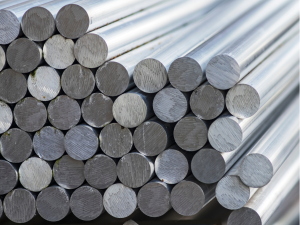
The moves include reciprocal procurement restrictions, import quotas, and the formation of stakeholder task forces for aluminum industries.
The actions, which includes tariffs, are necessary to protect the Canadian market from global overcapacity. They are also needed because other countries have redirected material to Canada as a result of higher US tariffs, Carney said.
The Trump administration has expanded the list of derivative steel products covered by the now 50% Section 232 tariff.
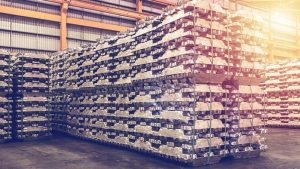
Hashing out duty costs

The latest SMU Community Chat webinar reply featuring Timna Tanners, managing director of equity research for Wolfe Research, is now available on our website to all members. After logging in at steelmarketupdate.com, visit the community tab and look under the “previous webinars” section of the dropdown menu. All past Community Chat webinars are also available under that selection. If […]

Some aluminum parts are being replaced by steel. And more manufacturers are salvaging what they can before sending vehicles to recyclers.